
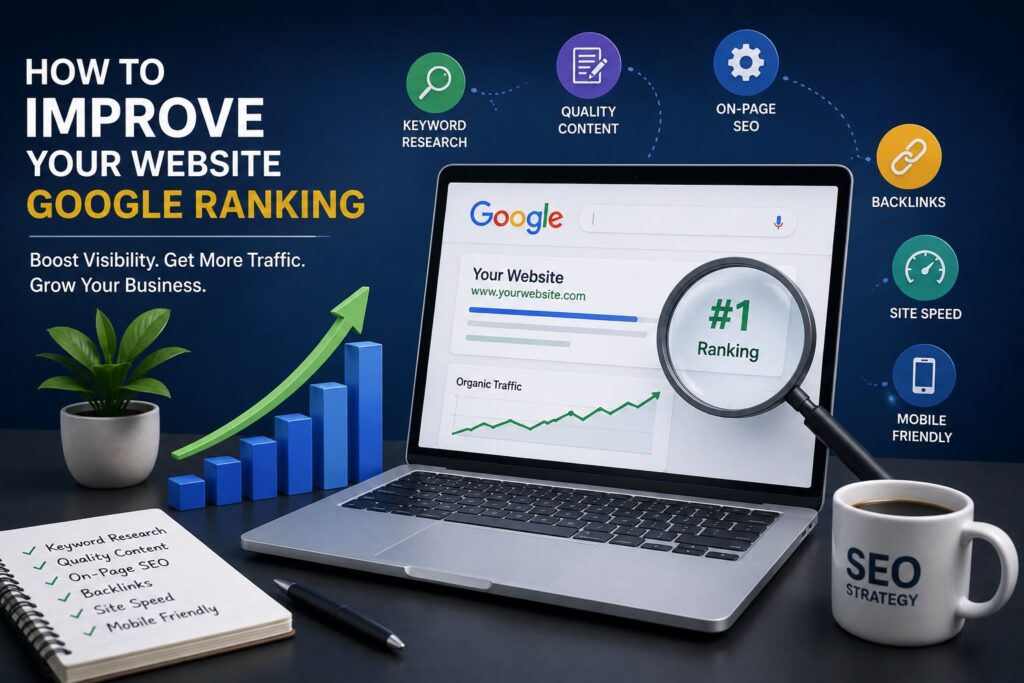

If your website isn’t appearing on the first page of Google, you’re likely missing valuable traffic and potential customers. The good news is that improving your Google ranking doesn’t happen by chance—it comes from applying proven SEO (Search Engine Optimization) strategies consistently. Whether you own a business website, an eCommerce store, or a personal blog, the following techniques can help your website rank higher in search results.
1.Research the Right Keywords
Keyword research is the foundation of SEO. Find the terms your target audience searches for and naturally include them in your page titles, headings, URLs, and content. Focus on keywords with good search volume and achievable competition.
2.Create High-Quality Content
Google prioritizes websites that provide useful, original, and informative content. Write articles that solve users’ problems, answer common questions, and offer genuine value. Update your content regularly to keep it relevant.
3.Optimize Your On-Page SEO
Every page should have:
- A compelling SEO title
- A well-written meta description
- Proper heading tags (H1, H2, H3)
- Keyword-rich URLs
- Optimized images with alt text
- Internal links to related pages
These elements help search engines understand your content better.
4.Improve Website Speed
A slow website creates a poor user experience and can hurt rankings. Compress images, enable browser caching, minimize unnecessary code, and use reliable hosting to improve loading speed.
5.Make Your Website Mobile-Friendly
Most Google searches happen on mobile devices. Ensure your website is responsive, easy to navigate, and loads quickly on smartphones and tablets.
6.Build High-Quality Backlinks
Backlinks from reputable websites act as votes of confidence for your site. Earn them by publishing valuable content, guest posting, and building relationships within your industry.
7.Focus on User Experience (UX)
Google rewards websites that offer a positive user experience. Make your website easy to navigate, improve readability, reduce bounce rates, and guide visitors to the information they need.
8.Optimize for Local SEO
If you serve customers in a specific location, optimize your Google Business Profile, use local keywords, and maintain consistent business information across online directories.
9.Use Structured Data (Schema Markup)
Schema markup helps search engines better understand your website and may improve your visibility with rich search results, such as star ratings, FAQs, and business information.
10.Monitor and Improve Performance
Track your website using Google Analytics and Google Search Console. Monitor keyword rankings, traffic, click-through rates, and technical issues so you can continuously improve your SEO strategy.
Conclusion
Improving your website’s Google ranking takes time, consistency, and the right SEO techniques. By creating valuable content, optimizing your website, improving user experience, and building authority through quality backlinks, you can steadily increase your visibility and attract more organic traffic. SEO is a long-term investment that delivers lasting results when done correctly.